


Knowledge is power
 Education, education. It all started when I passed my THX Home Theatre Level One earlier this year. The next stage has to be Level Two, but in the meantime I’m about to embark on a ‘Part P’ course for domestic electrical installation.
One of the surprising aspects of finding out where I can study for Part P was the difference in the cost of courses - it all depends on whether the commercial or the local government-funded route is taken. There is merit in both, but costs of the former can be alarming.
Friends have reminded me that I am a journalist, not an installer, so why would I want Part P? Someone also made the point that a lot of custom install companies don’t have Part P-qualified people on the staff.
I responded with the oft-quoted Baconism, “Knowledge is power.” And not to forget that installers with a Part P staffer or two, find it a distinct advantage to perform, and be able to pass, domestic electrical work associated with the custom installation. Being able to officially install stuff in my own house is handy for me too - as a self-confessed automation freak, the whole thing comes together nicely.
Education also helps when writing about technical things, and while I would struggle to program a Pronto, I actually managed to come up with a motorisation control circuit for a colleague involved at the periphery of the custom install industry. After the circuit was built and tested (it actually worked!), he asked me if I would like to see the installation where it was going to be used.
We duly turned up at the site and found to my surprise that it was quite an expensive project with some motorisation and lighting control but no global system or centralised equipment. The overall modifications were far-reaching, giving the impression that the client was not short of cash, but it seemed that no traditional integration company had been involved at any stage of the job.
It appeared that the client might not have been exposed to all the possibilities by an experienced custom installer and ended up with what can only be described as a mish-mash of disparate events within the house. A matter, perhaps, of client education?
Moving on, it’s been a long time since I’ve contacted the British Audio-Visual Dealers Association (BADA), but recently caught up with developments at their AGM held at the Royal Institute of British Architects building in Portland Place (if you ever need to go there, avoid the official website map for directions, it shows streets which aren’t there!).
More talk of education came up, this time it was about the new Demcraft and Visioncraft courses. It was suggested by a spokesperson that the training taken by BADA members who do installations as well as shop presentations, equips them with extra skills to perhaps do a better job than dedicated custom installers.
Education for custom installers feeling left out of the BADA loop can easily be addressed, as I hear that Demcraft and Visioncraft courses are available to CEDIA members.
A company involved in installs and hi-fi demonstrations might be tempted to say ‘we are the best’ but perhaps the best of both worlds is the custom installer who uses, when appropriate, the facilities of a retailer with good dem rooms. I know that Maidstone-based Alphabet AV Solutions have a cooperative venture with Unilet (New Malden) and Home Media’s (Maidstone) demo facilities to show potential install customers the combination of free-standing equipment alongside an integration package.
Many installers I know would disagree with audio systems which major on discrete equipment when the custom route is to fill a room with sound without the clutter of CD decks and AV receivers. As an installer said to me once, “We use one of our show homes to give the client an experience and prove beyond doubt that you don’t have to SEE loads of kit to get good results.”
Martyn Williams is HCD’s Contributing Editor, and chief CI writer
Scarlet fever
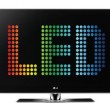
Stylish, sexy and sophisticated – that’s Scarlet. LG takes style and substance to the max with its latest range of super-slim Scarlet LCD TVs, the TVs that will make customers swoon
When is a TV series not a TV series? When it’s an ultra-stylish LCD TV, that’s when. With all the spin of a major new TV serial, ‘Scarlet, The Hit New TV Series’ was launched in the UK this May.
The latest models are the 32in, 37in, 42in and 47in models in LG’s very distinctive range of Scarlet LCD TVs, which it hopes will carry on the good work of its highly successful Design Art TV range in raising LG’s profile higher still in the UK.
Like its Design Art predecessors, the Scarlet packs a distinctive visual punch. With its striking, slim silhouette (it’s one of the world’s slimmest TVs), red-coloured back and soft touch on-off sensor, the LG6000 range is the epitome of elegance, and a far cry from the identikit black flatscreens battling for shelf space in many a showroom.
“We wanted to create a completely immersive experience, in terms of both aesthetics and viewing,” enthuses Anthony Yang, general product manager for LG Electronics. “The design draws the eye though the circular accent. We’ve also included a unique sound effect that activates when the TV turns on – it’s a truly mesmerising experience for the user.”
Befitting a TV that sports such a unique, iconic design, there’s plenty under the bonnet to give your customers reason to smile. The feature-heavy Scarlet comes equipped with an Intelligent Sensor for improved viewing. This clever sensor optimises the brightness, contrast, colour, sharpness and white balance of the picture, reducing unnecessary brightness and unwanted eyestrain.
This also has the added benefit of cutting power consumption by as much as an impressive 62 per cent. All the TVs in the Scarlet range are fully equipped for the demands of the high-definition age too, coming with a forward thinking four HDMI inputs.
The Scarlet range also includes Invisible Speaker technology (personally tuned by LG’s audio guru Mark Levinson); TruMotion 100Hz wizardry to tackle motion blurring on the 42in and 47in models; 1080p resolution on the 37in, 42in and 47in models (the 32in LCD TV has an HD Ready specification); and USB 2.0 connectivity for JPEG and MP3 playback.
The range also does its bit for the planet – the 32in, 37in and 42in models all proudly wear an Energy Saving Recommended badge.
So move over Miss Johansson… there’s a new Scarlet in town!
SpeakerCraft on safari
Does SpeakerCraft’s new interface for the iPhone or iPod Touch for its MZC/ MODE multi-room system mean the end of keypads? And has the innovative CI manufacturer pulled off a similar kind of magic to our Hot Topic TV star? Read on to find out…
“It’s nice to give a client something that feels familiar,” says SpeakerCraft’s Adrian Blundell about the inspiration for a new iPhone/iPod Touch interface for the brand’s popular MZC/MODE multi-room system.
Having debuted at CEDIA Expo and with usability at its core, the new interface adds even more power to the brand’s hugely functional MZC multi-room systems. With large virtual buttons, iPhone users will nd the look and functionality of the interface familiar and easy to operate. Key di erences
“The main reason for the interface was that the iPod and iPhone have become such popular source components, and it’s a technology that people are very familiar with,” says Adrian, who divides his time between roles as globe-trotting evangelist for SpeakerCraft and product support for CSE/Duet in the UK. Adrian explains that the new interface is essentially an enhancement for a MZC system. “It works as an alternative interface to the MODE keypad, not as a replacement of it. “
A web page is generated that can be viewed on an iPhone, iPod Touch or Safari for the Mac and Internet Explorer for the PC. An iPhone or desktop shortcut then takes the user to their very own version of the MZC multi-room interface – and from here they choose whatever they want and control any source component.
”The interface basically allows Apple’s iPhone or iPod Touch to be used as a wireless system remote, controlling all sources and routing via the touch screen – and an intuitive graphical user interface,” says Adrian.
“A lot of time was spent on developing an interface for integration with the iPhone and what we have now is a representation of a MODE keypad on an iPhone. As you’re browsing through you’ll see all available rooms and source components plus tracks and radio stations appropriate to the source you select.”
SpeakerCraft’s MZC/MODE multi-room 32-zone system can presently be controlled by in-wall keypads or the MODE Free hand-held version.
“The MZC is what I would call a system controller for multiple zones,” says Adrian. “You can control TVs and other components within each room – even on an iPhone you can operate your Sky box.”
It’s this simplicity that SpeakerCraft hopes will appeal to customers who aren’t fussed about how technology works, just that it will work.
“With most multi-room systems there’s always more to do than pressing play,” says Adrian. “So it’s nice for installers to say to a client ‘you just press a button’. That’s where the iPhone becomes so powerful – it can become 32 different remote controls by showing what sources are in each room. It takes the question and produces a complete answer.”
“The interface will get its first showing at CEDIA UK, but the response so far has been wonderful,” says Adrian. “There are no spare buttons – they all have a reason for being there – and that’s crucial. “It’s easy to get enthusiastic about new technology, but a lot of people are easily bored with it – they want simplicity. The new iPhone interface is all about understanding what people want and offering it to them in an understandable way.”
“We’re also trying to give as much flexibility to installers to allow more than a taste of what a control system offers,” says Adrian. For instance MODE Free, SpeakerCraft’s new mobile two-way unit, is another way to enjoy room-to-room control. Essentially it takes the MODE keypad out of the wall. MODE Free also has advantages over the iPhone interface. Wi-Fi network limitations mean a maximum of two iPhones can be simultaneously ‘logged in’; whilst with MODE Free up to sixteen two-way wireless controllers can be connected to the same MZC system. Both the iPhone and MODE Free can be used on the same system. That’s why CEDIA Expo is so crucial.
“CEDIA is vital” says Adrian. “It’s the only totally residential trade show and residential is very much SpeakerCraft’s focus. CEDIA allows dealers to see what we’re up to and get a feel for what’s going on – and also give feedback on what we’re doing right and what we could do better.”
The message at CEDIA will be that multi-room is no longer the domain of wealthy, tech-savvy end users.
“There will be a day when multi-room music and video, and lighting control are considered as important as central heating. Then, as an industry we can pat ourselves on the back,” says Adrian.
“It’s been an amazing journey for SpeakerCraft,” says Adrian. “The company that invented in-wall speakers now has around five hundred in-wall speaker designs to offer installers.
“Clients and dealers have unique problems and it’s an international market. As a company SpeakerCraft is very responsive to the weird and wacky ideas of installers and consumers who want to have their cake and eat it – and why not!”
See SpeakerCraft at CEDIA Expo Stand C5
www.csesolutions.co.uk
01423 359054